
Overcoming Accessibility Challenges for a Better Tomorrow

Updated: Mar 1
Understanding Accessibility Challenges
People with physical disabilities and older adults often face multiple barriers that limit their mobility and access. These include:
Physical barriers such as stairs without ramps, narrow doorways, and uneven surfaces.
Transportation difficulties due to lack of accessible vehicles or infrastructure.
Limited access to assistive devices like walkers, wheelchairs, or hearing aids.
Inadequate public facilities including restrooms, seating, and signage.
Social isolation caused by inaccessible environments and lack of community support.
Each of these challenges can reduce quality of life and increase dependence on others. Recognizing these issues is the first step toward meaningful change.
Practical Solutions for Physical Accessibility
Improving physical accessibility requires thoughtful design and community involvement. Here are some effective approaches:
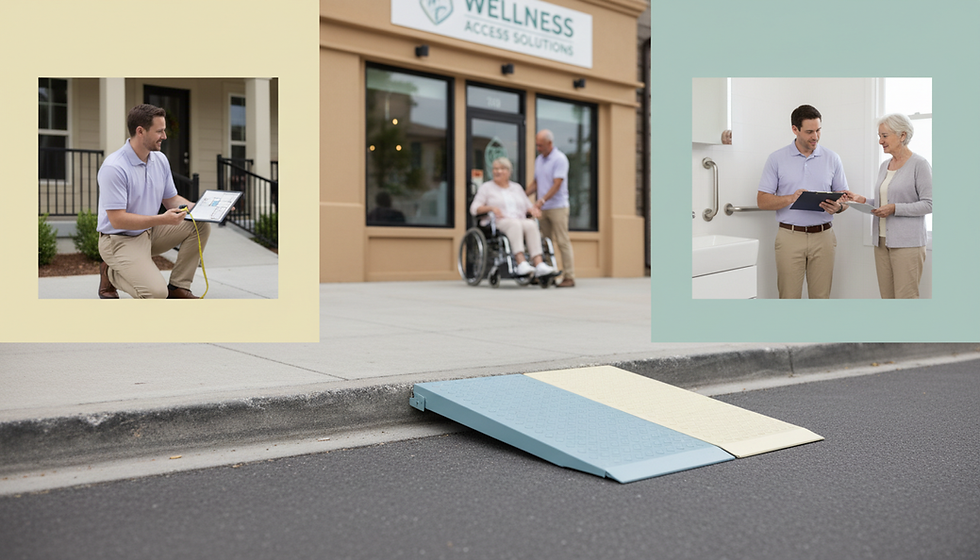
Install ramps and lifts in public and private buildings to replace or supplement stairs.
Widen doorways and hallways to accommodate wheelchairs and mobility aids.
Use non-slip flooring and clear pathways to reduce fall risks.
Provide accessible restrooms with grab bars and enough space for maneuvering.
Ensure proper lighting and clear signage to assist those with visual impairments.
For example, a community center that added a ramp and automatic doors saw a 40% increase in visits from elderly and disabled residents. This simple change made the space welcoming and usable for more people.
Technology and Assistive Devices
Technology plays a vital role in overcoming accessibility challenges. Some helpful tools include:
Mobility aids such as powered wheelchairs, scooters, and walkers.
Voice-activated devices for controlling lights, doors, and appliances.
Hearing aids and amplified phones to improve communication.
Screen readers and magnifiers for those with visual impairments.
Smart home systems that allow remote control of household functions.
Access to these devices can significantly improve independence. Community programs that lend or subsidize assistive technology help bridge the gap for those who cannot afford them.
Transportation and Mobility Support
Getting around safely and easily is crucial. Solutions include:
Accessible public transit with low-floor buses and priority seating.
Paratransit services that provide door-to-door rides for people with disabilities.
Community ride-share programs tailored for elderly and disabled passengers.
Safe pedestrian infrastructure like curb cuts, audible crosswalk signals, and benches.
In one city, adding audible signals at crosswalks reduced accidents involving visually impaired pedestrians by 30%. Such changes make streets safer and more navigable.

Building Inclusive Communities
Beyond physical changes, fostering a supportive community is essential. This includes:
Raising awareness about the needs of people with disabilities and the elderly.
Encouraging businesses and organizations to adopt inclusive practices.
Offering training for staff on how to assist individuals with accessibility needs.
Creating social programs that reduce isolation and promote engagement.
Involving people with disabilities and seniors in planning and decision-making.
Communities that prioritize inclusion see better health outcomes and stronger social connections among their members.
How Individuals Can Help
Everyone can contribute to improving accessibility:
Advocate for local policy changes that support accessible infrastructure.
Volunteer with organizations that assist people with disabilities or seniors.
Support businesses that provide accessible services.
Educate yourself and others about accessibility challenges and solutions.
Be patient and respectful when interacting with people who have mobility or sensory impairments.
Small actions add up to meaningful progress.
The Role of Businesses in Accessibility
Businesses play a crucial role in creating accessible environments. By implementing inclusive practices, they can cater to a broader audience. Here are some strategies for businesses:
Conduct accessibility audits to identify barriers in their facilities.
Train employees on how to assist customers with disabilities.
Offer flexible services such as online consultations to accommodate various needs.
Invest in accessible technology to enhance customer experience.
By prioritizing accessibility, businesses not only comply with regulations but also build loyalty and trust within the community.
Conclusion
Accessibility is a shared responsibility. By understanding the challenges and implementing practical solutions, we can create a more inclusive society. Whether through community initiatives, technological advancements, or business practices, every effort counts. Together, we can ensure that everyone has the opportunity to thrive, regardless of their physical abilities.
For more information on accessibility solutions, visit MEDAccess.


Comments